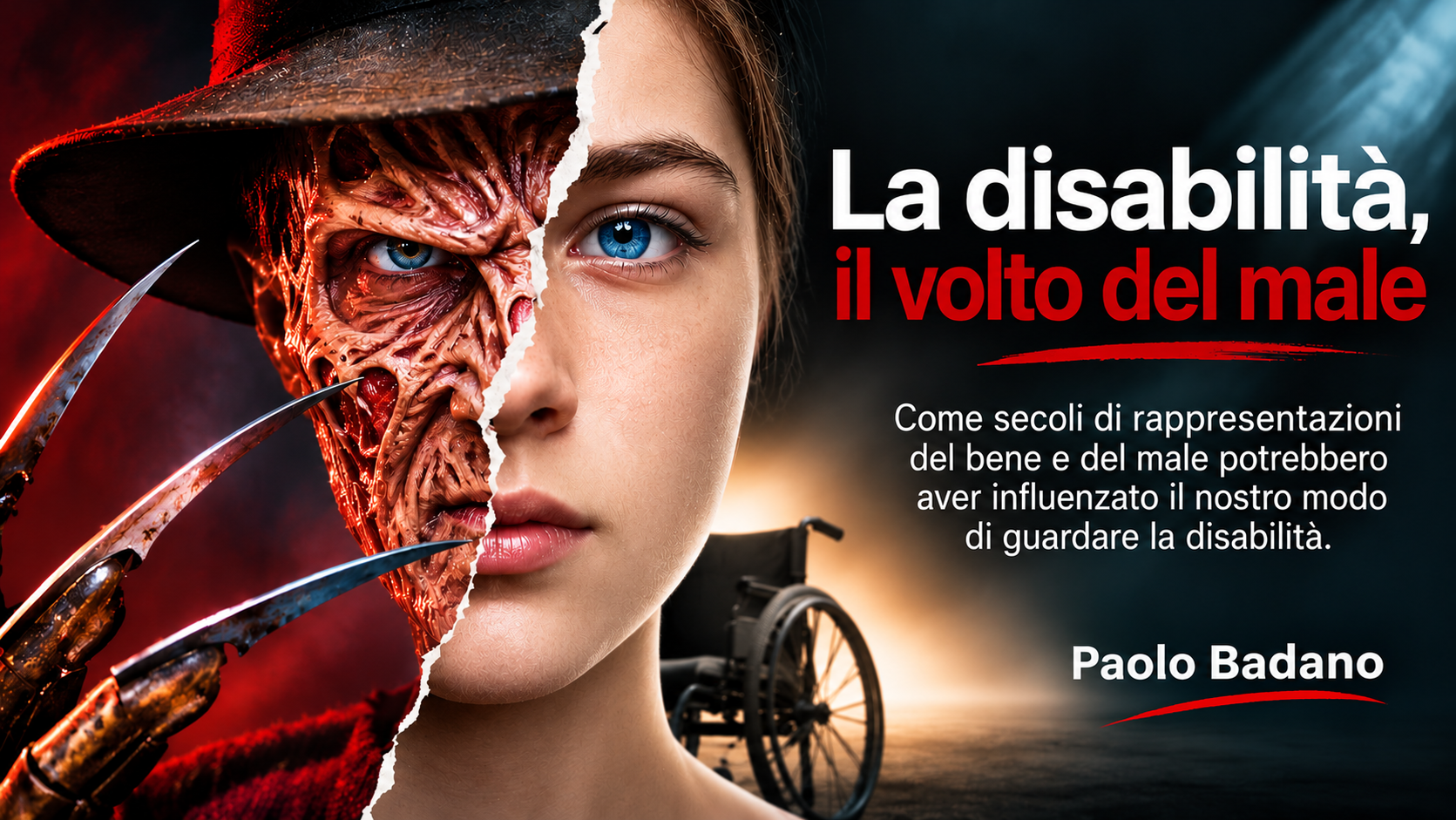
For centuries, we have built a visual language in which beauty, harmony and physical perfection represent good, while deformity, imperfection and bodily differences are often used to represent evil.
Disability may have suffered the indirect consequences of this cultural construction, even when there was no explicit intention to discriminate against people with disabilities.
Good is beautiful. Is evil ugly?
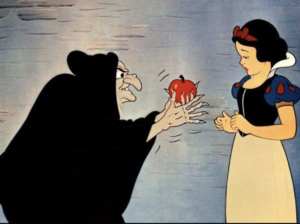
Consider Snow White. The heroine is young, beautiful and well-proportioned. The witch, by contrast, is old and hunched over, with a prominent nose and bony hands. No one needs to explain which of the two we should fear: the image has already told the story.
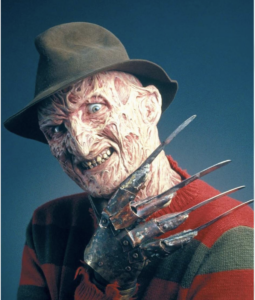
Then think of Freddy Krueger, the central character in A Nightmare on Elm Street. His face bears deep burn scars. That face, even before his actions, makes him instantly recognizable as a monster.
But those very same scars could belong to someone who survived a fire. They could be the marks of a tragedy, of suffering endured and of a life that goes on. Think, too, of people whose bodies bear the consequences of a fire such as the one in Crans-Montana.
How can a physical characteristic that, in real life, tells a story of suffering become a sign of wickedness in fiction?
A missing hand. A body that depends on technology.
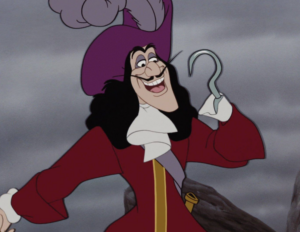
Captain Hook has lost a hand. His amputation is not a minor detail: it becomes his name, his symbol, the feature that identifies him. Something that, in real life, might tell the story of an accident or an illness becomes part of the image of an antagonist.
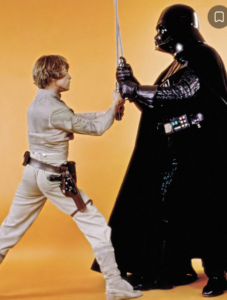
And Darth Vader? Behind his armour is a man with severe injuries, amputations and an artificial system that allows him to breathe. The technology that keeps him alive also helps create his threatening presence.
In Star Wars, another powerful contrast comes into play: light and darkness. The black of Vader’s armour and the dark side stand against the light associated with the heroes. It is not a rule without exceptions, but it is a visual language we seem to understand instinctively.
Why? And how much of that understanding is truly instinctive, and how much have we learned?
The problem is not the villains
I do not think cinema should give up its monsters, or that every person with a disability must be portrayed as good or heroic. A character with a disability can also be an antagonist, just like anyone else.
The question is different: why is physical difference so often used to tell us that someone is dangerous, even before we know what they have done?
Perhaps this choice comes from age-old artistic conventions, from the need to tell a story through simple, immediate images. Perhaps, in many cases, there was never any intention to target people with disabilities.
But does the absence of discriminatory intent necessarily rule out the possibility of unintended consequences?
As children, we learn that we should not judge people by their physical appearance. Yet we grow up surrounded by stories in which a body, a face or even a prosthesis can suggest who is good and who is evil.
I do not know how much all of this influences our behaviour. I do not want to present certainty where it would be more useful to open a discussion. I simply want to ask whether the way we look at disability might also have been shaped, in part, by these stories.
The question I would like to leave with you
If, for generations, we have learned to recognize villains by their physical differences, how free are we really from those associations when we meet a person with a disability?
And, above all, how often is our first impression influenced by a story someone else has told us?
Leave a Reply